
A war hero looks back at the men and the moments that forged India's greatest military victory.

"Each soldier was my brother in arms.' 'We fought together and achieved glory for India.' 'We fought on with only one thing in the mind -- that that this is a national battle and we must not let the Pakistanis get the better of us,' says Major General Shamsher Singh, who was awarded the Mahavir Chakra for fighting in one of the bloodiest battles the Indian Army has ever waged.

'The separatist resurgence in Balochistan is thwarting Pakistan's plans to build CPEC projects to optimally utilise Balochistan's energy reserves,' points out Brigadier Gurmeet Kanwal (retd).

'He destroyed many of our tanks, and finally, it was just the two of us left facing each other with our tanks just 200 m apart.' A tale of valour excerpted from Rachna Bisht Rawat's 1971: Charge Of The Gorkhas And Other Stories.

Lieutenant General J F R Jacob, Chief of Staff, Eastern Army Command during the 1971 war, revealed how, armed with only a draft surrender document and an aide, he made the Pakistani army led by Lieutenant General A A K Niazi surrender.
Lieutenant General J F R Jacob, Chief of Staff, Eastern Army Command during the 1971 war, revealed how, armed with only a draft surrender document and an aide, he made the Pakistani army led by Lieutenant General A A K Niazi surrender.
Lieutenant General J F R Jacob, Chief of Staff, Eastern Army Command during the 1971 war, revealed how, armed with only a draft surrender document and an aide, he made the Pakistani army led by Lieutenant General A A K Niazi surrender.
Lieutenant General J F R Jacob, Chief of Staff, Eastern Army Command during the 1971 war, revealed how, armed with only a draft surrender document and an aide, he made the Pakistani army led by Lieutenant General A A K Niazi surrender.
Lieutenant General J F R Jacob, Chief of Staff, Eastern Army Command during the 1971 war, reveals how, armed with only a draft surrender document and an aide, he made the Pakistani army led by Lieutenant General A A K Niazi surrender.
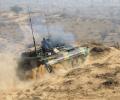
'Should the two armies clash in a conventional battlefield, the advantage will pass more and more to the Indians as the battle progresses,' says Brigadier S K Chatterji (retd).

Major Somnath Sharma was awarded the Param Vir Chakra posthumously for his bravery in the Kashmir operations on November 3, 1947.
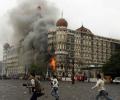
Pakistani-American terrorist David Coleman Headley on Thursday exposed how Inter-Services Intelligence and Lashkar-e-Tayiba majorly funded terror operations in India.

Pervez Musharraf is contemplating a political front with jihadi groups to contest Pakistan's next election. Should the jihadi groups win a few seats, terrorist outfits will gain legitimacy in Pakistan, warns Brigadier S K Chatterji (retd).
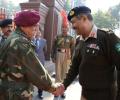
Fourteen years after they last met, the directors general of military operations of India and Pakistan on Tuesday held an over two-hour-long meeting at the Wagah border to ease tensions and ensure peace on the Line of Control.

Testifying before a Mumbai court for the second day on Tuesday, Pakistani-American terrorist David Coleman Headley said LeT had planned to attack Indian defence scientists at the Taj Mahal Hotel in Mumbai and that he was asked by Pakistan's ISI to recruit Indian armymen to spy for them.

The Indian Army must be given a free hand to retaliate punitively at one or more places of its choosing on the LoC. The aim should be to cause maximum damage to the forward posts of the Pakistan army, particularly those through which recent attacks have been launched, thereby raising the cost for the army, says Gurmeet Kanwal.
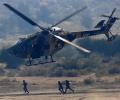
'Given the present force levels, India cannot fight and win.' 'India can't hope to terminate the conflict on India's terms and impose the nation's will upon the adversaries,' says Brigadier Gurmeet Kanwal (retd).
'We need to be in a perpetual state of aggression, and able to swiftly change the goal posts to keep Pakistan in a state of imbalance,' argues Sanjeev Nayyar.
'If India employed a strategy of a 'thousand cuts', Pakistan will wither away.'

'Vibhuti was a braveheart.' 'He always said I cannot stay behind. He always wanted to lead.' A cousin and friend remember Major Dhaundiyal who made the supreme sacrifice for the motherland on Monday.

Armed forces and the police can only ensure that violence is kept under control but for any kind of lasting peace, politicians will have to find an answer to the perception that the Indian State is anti-Islam. Therein lies the biggest challenge to the Modi government, says Colonel Anil A Athale (retired).

'We rarely choose to fight when the threat is still a nascent threat. When we do fight, we fight when the invaders reach Panipat and are preparing to knock on the gates of Delhi.'

'Were they two yaars of yesteryears brought together again by fate?' 'Were they two crafty spies hoodwinking each other?' wonders B S Prakash.
Throughout a quarter century of proxy war, India has shown tremendous restraint in the face of grave provocation. It is inconceivable that any other nation would have refrained from launching trans-LoC operations to eliminate terrorist training camps and interdict known routes of infiltration, says Brigadier Gurmeet Kanwal (retd).

50 years after the 1965 War, India still thinks we can have a 'limited war' when our opponent has time and again shown it does not believe in a limited war, says Colonel Anil A Athale (retd).

'I realised what a great leader he was by the way he took decisions to undertake the most-risky of missions.'

'The military aim in a future conflict, if it can't be avoided, should be to cause maximum damage to the adversary's war waging capability and capture limited amount of territory as a bargaining counter,' says Brigadier Gurmeet Kanwal (retd).

'We have leaders who would rather that we cohabit with the Indian Mujahedeen than fight terror, as long as the payoffs are there in the next polls... Obviously, we are not headed down the best route to keep terror at bay,' says Brigadier S K Chatterji (retd).
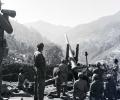
Fifty years ago, India and Pakistan fought a short but bloody war. The author finds out how Sainik Samachar, the defence ministry's journal, reported it.
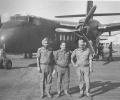
Dad had sneaked into East Pakistan (present day Bangladesh) well before the war had started for reconnaissance of the terrain on the other side. He had disguised himself as a driver of a truck laden with goods and traveled into East Pakistan to be received by the underground fighters of the Mukti Bahini.
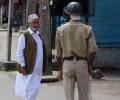
'Pakistan will leave no stone unturned to keep Kashmir on the edge and put the entire blame on the Government of India if there is any untoward incident,' says Brigadier Narender Kumar (retd).
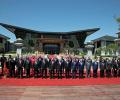
'Whichever option India chooses, it should be clear to the government that the China-Pakistan nexus poses a clear and present danger to national security,' says Brigadier Gurmeet Kanwal (retd).

'Syed Salahuddin and Muhamed Sayeed would not have survived so long if they were in the cross-hairs of Mossad,' says Brigadier S K Chatterji (retd).

'Notwithstanding the realisation among the Indian leadership to build up its navy for the force's expanding role, the Indian Navy was allocated only 15% of the interim defence budget presented in Parliament in February 2019.' 'The outlay for the navy's capital acquisition is not even adequate to meet its committed liabilities,' points out Brigadier S K Chatterji (retd).

'Often reviled, mostly ignored, sometimes venerated, he has taken it all in his stride.' 'He has stood by the nation through thick and thin,' says Brigadier Gurmeet Kanwal (retd).

'As far as acquisition of Russian equipment is concerned, with about 70% of Indian military equipment being of Russian origin, a sudden decision to abandon imports from Russia is not feasible,' points out Brigadier S K Chatterji (retd).
'Collateral damage during operations needs to be avoided.' 'Such an objective can be achieved more easily should stone throwers not gear up to en masse oppose security forces.' 'With the conditions being quite sensitive at this stage, the death of one of these boys could easily serve the terrorists in instigating violence,' notes Brigadier S K Chatterji (retd).

'Ensuring through diplomatic means and in conjunction with strategic partners that India will not be required to fight a simultaneous two-front war with China and Pakistan.' Brigadier Gurmeet Kanwal (retd) lists what India must have in its national security strategy.

'For India, the phase of pure restraint has passed.' 'Restraint has failed to reform Pakistan or rein in terrorism,' says Vivek Gumaste.

'She has to get the funds, cut through bureaucratic flab, speed up modernisation, ensure planned acquisitions stick to timelines, make organisational changes and ensure the military is capable of performing the task that it is given,' says Brigadier S K Chatterjee (retd).
